Responsible Gambling & Player Safety
Why this page exists
BonusScout rates no-deposit bonus offers, but no score on this site means an offer is “safe to chase”. Bonuses are a form of entertainment with a cost, and for some people gambling stops being fun and starts causing harm. This page sets out how to recognise that, the tools that help you stay in control, and where to get free, confidential support.
Gambling is for adults only — you must be 18 or over (21 in some places) to play. If you are reading this on behalf of someone you are worried about, the support resources below help families and friends too.
Gambling is entertainment, not income
The single most useful mindset is to treat any money you gamble as the price of entertainment, like a cinema ticket or a meal out. The mathematics of every casino game favours the operator over time, so the expected long-run outcome is a loss. A winning session is enjoyable, but it is variance, not a strategy.
Two habits follow from this. First, only ever play with money you can comfortably afford to lose. Second, never gamble to win back what you have lost — “chasing losses” is one of the clearest paths from entertainment into harm.
Warning signs to watch for
Problem gambling rarely announces itself. It tends to build gradually, and the warning signs are behavioural and emotional as much as financial. Be honest with yourself if you notice any of the following:
- Spending more money or time gambling than you intended, repeatedly.
- Chasing losses — betting more to try to recover money you have already lost.
- Gambling with money meant for bills, rent, food or other essentials.
- Borrowing money, selling things, or hiding the extent of your gambling from people close to you.
- Feeling restless, irritable or anxious when you try to cut down or stop.
- Lying about how much you gamble, or gambling in secret.
- Neglecting work, study, family or social commitments because of gambling.
- Gambling to escape stress, low mood or other problems.
Noticing one of these does not automatically mean you have a gambling problem, but several of them together are a strong signal to step back and seek support. The organisations listed below offer free, confidential self-assessments.
Practical tools that help
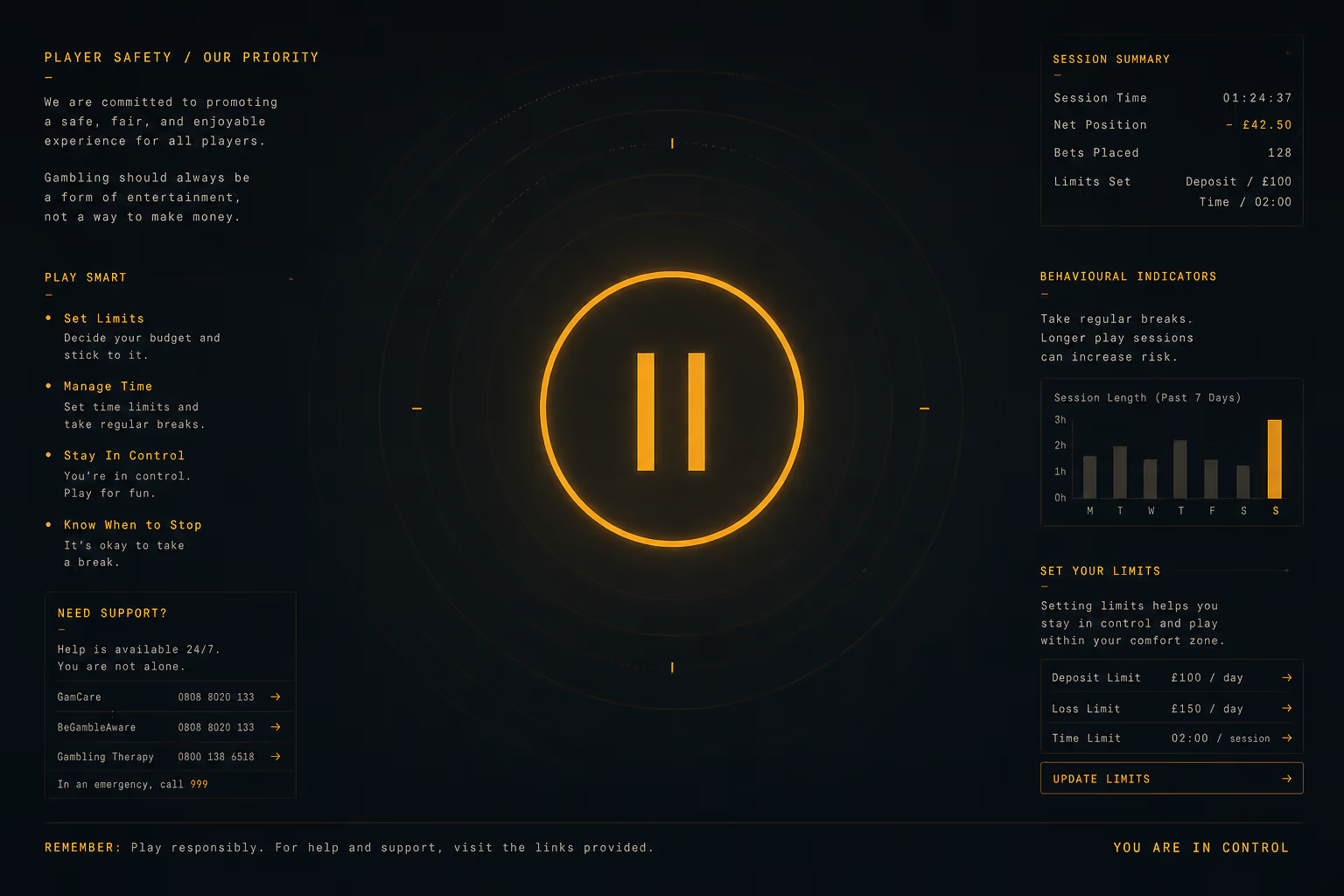
Every licensed operator is required to offer player-protection tools. Using them early — before a session, not in the heat of one — is the most effective approach.
- Deposit limits. Cap how much you can pay in per day, week or month. Set this when you open an account, while you are thinking clearly.
- Loss limits. Where offered, these cap how much you can lose over a period, independent of how much you deposit.
- Time limits and reminders. Set a session length, or enable reality-check pop-ups that tell you how long you have been playing.
- Time-outs. A short, self-requested break — typically 24 hours up to several weeks — that blocks play without closing your account.
- Cooling-off periods. A slightly longer pause for when you want more distance than a time-out provides.
- Self-exclusion. A formal block on your account for months or years. National schemes extend this across many operators at once — see GAMSTOP below for Great Britain.
- Spending and activity statements. Most operators let you review your real deposits, losses and time played. Looking at the true totals can be a powerful reality check.
You can read how these terms appear in offer small print on our no-deposit bonus glossary, and you will find every offer we have assessed on the home page ledger.
Where to get free, confidential help
If gambling is causing you or someone you know distress, support is available now — most of it free and confidential, around the clock.
- BeGambleAware — advice, tools and a free helpline for anyone in Great Britain: begambleaware.org
- GamCare — free information, support and treatment, including a 24/7 helpline and live chat: gamcare.org.uk
- Gamblers Anonymous — a fellowship offering local and online support meetings worldwide: gamblersanonymous.org
- GAMSTOP — free self-exclusion from all UK-licensed gambling sites: gamstop.co.uk
- US National Problem Gambling Helpline — free, confidential, 24/7 across the United States: call or text 1-800-522-4700.
Reaching out is a sign of strength, not weakness, and the people on these helplines speak to callers in exactly your situation every day.
Keeping play safe
If you choose to play, a few simple rules keep it that way: decide your budget before you start, set your limits in advance, never chase losses, take regular breaks, and never gamble while upset, stressed or under the influence. If any of that feels hard to stick to, treat it as a signal to pause and use the tools and support above.
To understand exactly how we assess the offers listed on this site, read our methodology page. And remember — you must be 18 or over to gamble, and a bonus is only ever entertainment, never an investment.