New & Recently Added No-Deposit Offers
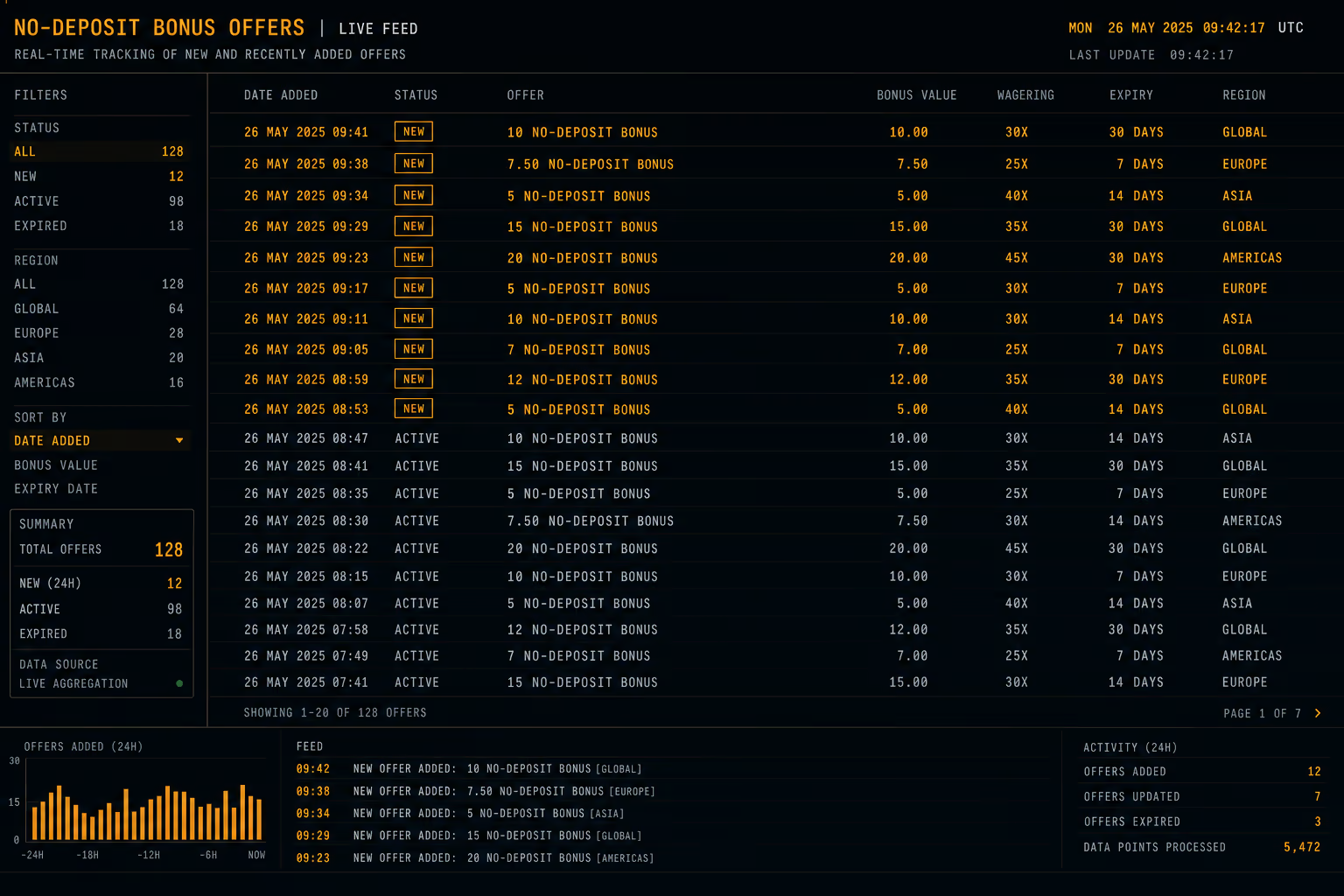
Where the new offers actually live
The freshest no-deposit offers are on the homepage. That is where the full offer ledger sits — every current offer, each with its value score, grade and terms, and each date-stamped with the day it was last verified. Recently added offers carry the most recent dates, so the ledger doubles as the “what’s new” list: sort or scan by the verification date and the newest entries surface.
This guide is the companion to that ledger. It explains how new offers get there, what “new” is worth to you, and why a brand-new offer is held to exactly the same standard as one that has been listed for months. But the offers themselves — the thing you are looking for — are on the homepage.
How new offers are found and verified
Adding an offer to the ledger is a manual process, and deliberately so. The steps behind every new entry are the same:
- Identification. New and newly changed offers are spotted through ongoing review of casinos’ own promotions pages and terms. The source of truth is always the casino’s published terms, never a third-party list.
- Verification, field by field. Before an offer is added, each term is checked against the casino’s own site: the bonus amount, the wagering requirement, the maximum cash-out cap, the expiry window, the eligible games and any required code. If a field cannot be confirmed, the offer is not added.
- Date-stamping. The offer is tagged with the date a person confirmed those terms. That date travels with the entry so you always know how current it is.
- Scoring. The verified terms are run through the four-factor formula to produce the 0–100 value score and A–F grade.
This is the important part to be honest about: none of this is a live feed. Nothing on the site is scraped on a schedule or auto-updated. The data is verified and refreshed by hand, and the date stamp on each offer is what makes that trustworthy — it tells you the last time a human actually looked. The trade-off is that “new” here means “recently verified and added by a person,” not “pushed the instant a casino changed a page.” We think that trade-off is the right one: a hand-checked, dated entry is worth more than a fast but unverified one.
What “new” should — and shouldn’t — mean to you
“New” is one of the most over-weighted words in bonus marketing, so it is worth being precise.
What new should mean: the offer was recently added to the ledger, or recently launched by the casino, and its verification date is recent. That is genuinely useful — a recent date means the terms were confirmed lately and the entry is fresh.
What new should not mean: that the offer is good, or urgent, or better than older listings. Newness carries no information about quality. A brand-new offer can pair a big headline with 60x wagering, a tight cap and a 24-hour window and score poorly — see the worth-it guide for why that combination guts an offer. Meanwhile a long-standing entry with clean terms can sit near the top of the board. There is also no reason to rush a claim simply because an offer is new; the terms and the value score are the only things that should drive that decision.
In short: use “new” to find what has changed recently, then judge what you find on its merits — exactly as you would any other offer.
New offers are scored exactly the same way
A brand-new offer gets no special treatment, in either direction. It is run through the identical four-factor formula that governs every entry on the site:
- Wagering requirement — 35%. How many times the bonus must be staked before winnings can be withdrawn.
- Cash-out headroom — 30%. How much you are actually allowed to keep relative to the bonus.
- Bonus size — 20%. The headline amount — important, but far from decisive.
- Time to clear — 15%. The expiry window measured against the wagering you would have to complete inside it.
Those weights produce the same 0–100 score and A–F grade for a new offer as for one added months ago, which is what makes the ledger comparable across time. A new offer earns its place near the top only by having terms that deserve it. The complete formula, with the scoring bands and a worked example, is on the methodology page.
Putting it together
To see what is new, go to the homepage ledger and look at the most recent verification dates. To judge whether a new offer is worth claiming, read its terms and its score — newness alone is never the reason. When you decide to claim one, the step-by-step guide covers the mechanics, and if the offer needs a code, the bonus codes guide explains how codes behave. Whether you should bother at all is answered honestly in the worth-it guide. All five guides are collected on the guides hub.
These are entertainment offers for adults of legal gambling age, available where the casino is licensed, and nothing here implies a guaranteed return. A new offer is just an offer you have not seen before — read it the same careful way, and let its score, not its novelty, decide.