Crypto No-Deposit Bonuses, Explained
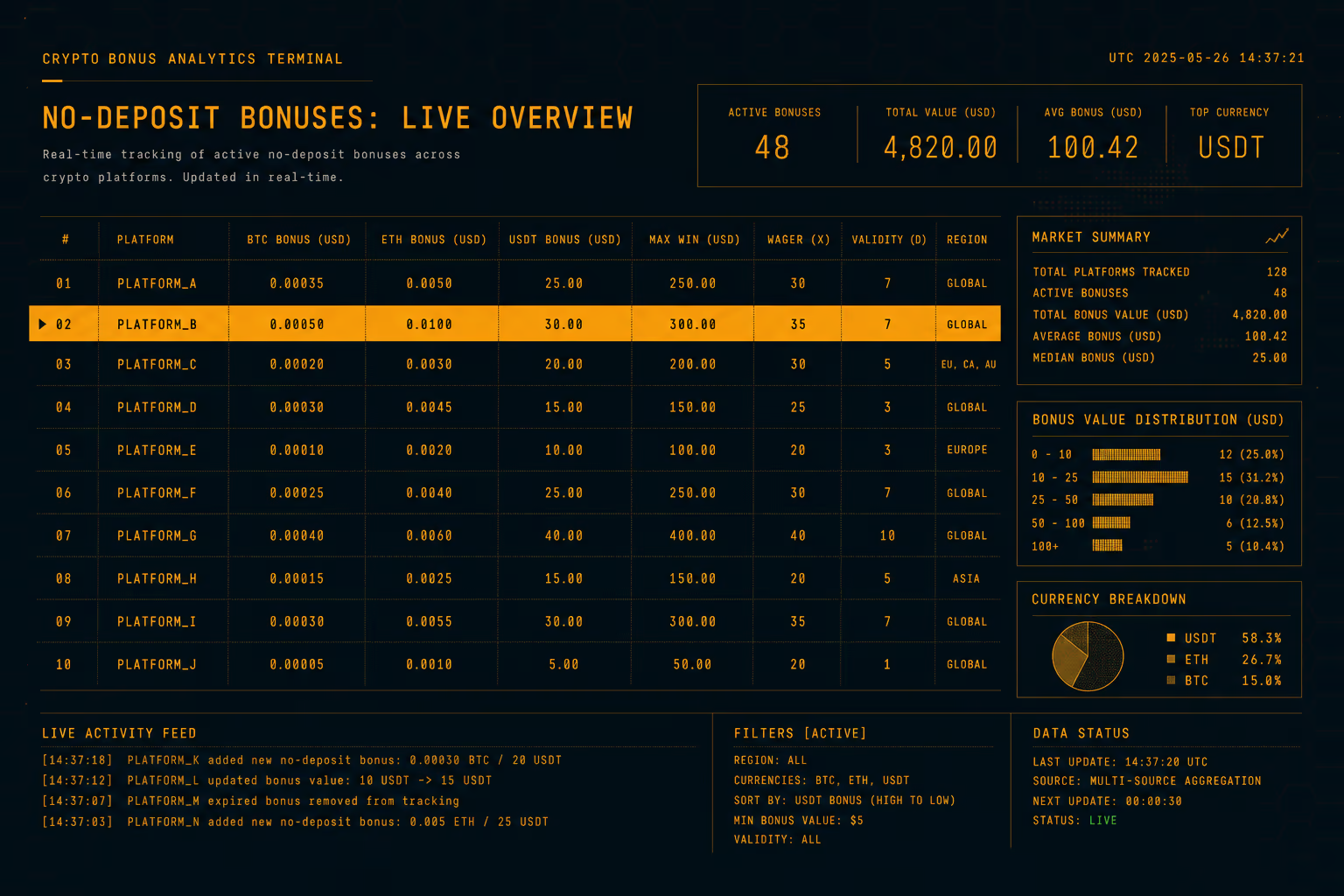
Same bonus engine, a different settlement layer
A crypto no-deposit bonus runs on the same engine as a fiat cash bonus. The wagering multiplier, the maximum-cashout cap, the eligible-games weighting — all behave exactly as they do on a dollar-denominated chip. What changes is the layer around the bonus: it is denominated and paid in a cryptocurrency, withdrawn to a wallet, and that introduces three value-moving variables a fiat offer never has — network fees, exchange-rate handling, and a more variable KYC policy.
So the right way to value a crypto offer is in two passes. First, value it as you would any cash bonus, using the cash and chips method: wagering against max-cashout. Then adjust for the crypto layer, which can push the real value a few points either side of the fiat equivalent. This page covers that second pass.
Read the core terms first
Before anything crypto-specific, the offer is a cash bonus and is valued like one:
- Wagering multiplier on the bonus amount. A 0.0005 BTC bonus at 40x requires the equivalent of 0.02 BTC of turnover.
- Max-cashout — your ceiling, often expressed as a coin amount or a fiat-equivalent figure.
- Game weighting — slots usually count 100 percent, table games far less.
These map directly onto the four-factor score, with wagering at 35 percent and cash-out headroom at 30 percent doing most of the work, exactly as on a fiat offer. If the core terms are bad, no crypto advantage rescues them.
Coin and wallet specifics
Crypto no-deposit bonuses are most often denominated in Bitcoin (BTC) or Ethereum (ETH), with Litecoin (LTC), Dogecoin and stablecoins (USDT, USDC) frequently supported. The choice of coin is not cosmetic — it determines both the network fee you will pay to withdraw and whether the offer carries exchange-rate risk.
You will withdraw to a crypto wallet you control, and the offer’s terms specify which coins and networks are eligible. A bonus payable in a stablecoin on a low-fee network is the most predictable to value; one payable in BTC on a congested network at a small cap is the least.
Network fees: small caps suffer
Every crypto withdrawal pays a network fee, and that fee is a flat cost largely independent of the amount you are moving. On a $200 cleared balance, a few dollars of fee is noise. On a $20 cleared balance — which is the realistic outcome from a small no-deposit offer — the same fee can take a meaningful slice of what you keep.
This is why network fees matter more on no-deposit bonuses than on larger deposit bonuses: the cleared amounts are small, so a fixed fee is proportionally large. Stablecoins on low-fee networks minimise the bite; Bitcoin during network congestion is the worst case. We treat a predictable network fee as a direct deduction from the offer’s real value.
Exchange-rate handling
The single biggest difference from a fiat offer is exchange-rate exposure, and it depends entirely on how the operator denominates the bonus:
- Stablecoin or fiat-equivalent denomination — the cap and your balance hold a roughly fixed dollar value. No rate risk; the offer values like a fiat bonus.
- Volatile-coin denomination (BTC, ETH) — the fiat value of your cap and your cleared balance moves between the moment you claim and the moment you cash out. A cap fixed at a coin amount can be worth more or less in real terms by redemption, and the wagering you complete is on a balance whose dollar value is drifting underneath you.
A “0.001 BTC max cashout” is not a fixed dollar figure; its real value is whatever BTC is worth when you withdraw. For valuing an offer reliably, a stablecoin denomination is strongly preferable because it removes this uncertainty.
KYC differences
Know-your-customer policy varies more in crypto than in fiat. Some crypto-first operators allow play and even small redemptions with minimal verification; others apply full KYC before any withdrawal, including from a bonus balance. The difference affects how quickly a cleared balance actually reaches you — lighter KYC means faster access, while heavier or later-triggered KYC can delay a redemption you have technically earned. It also affects whether you can redeem at all if you are unwilling or unable to verify. We read the KYC policy as part of the time-to-clear picture, since verification delay is, in practice, added time before value arrives.
Where the score lands
Stack the crypto layer on top of identical core terms and the offer moves predictably:
- Slightly below the fiat equivalent when there is a real network fee on small cash-outs plus exchange-rate exposure on a volatile coin.
- At or slightly above the fiat equivalent when the bonus is in a stablecoin (no rate risk), on a low-fee network (negligible withdrawal cost), with light KYC (fast access).
So a crypto offer is never automatically better or worse than fiat — it depends on the surrounding layer. The headline “crypto bonus” tells you nothing on its own; the coin, the network fee, the denomination and the KYC policy tell you everything.
A checklist for any crypto offer
- Value the core terms as a cash bonus: wagering × amount, and the max-cashout.
- Identify the coin and network, and the withdrawal fee — heavier on small balances.
- Check the denomination: stablecoin (no rate risk) versus volatile coin (rate exposure).
- Read the KYC policy for redeeming a bonus balance.
- Adjust the fiat-equivalent value up or down for those four extras.
Where this sits
Crypto offers are one of several no-deposit types we score on the same 0–100 axis; compare them against free spins, cash chips and sweeps grants on the bonus types hub. The full weighting and normalisation are on the methodology page, and currently verified, date-stamped offers are listed on the homepage.
Crypto no-deposit play is for adults of legal gambling age. A favourable score reflects clean terms and a low-cost, low-risk withdrawal layer — not a likelihood of profit. Coin prices and network fees can change at any time, which is one more reason the date stamp on each offer matters.